Dazzle While FrazzledThrifty DIY home decor and easy crafts

Kids and Family

DIY Bunny Ears from Pipe Cleaners

A plain headband and a few pipe cleaners make bunny ears in about ten minutes. Wear them to an Easter egg hunt, a spring party or a school play. No glue gun needed, so kids can make their own.

  • Time About 10 minutes
  • Skill Easy, kids can do it

Before you start. Measure the ears against the child before you twist anything: about the length of their hand from wrist to fingertip looks right for most ages. Pipe cleaners have sharp wire ends, so a grown-up should do the trimming. Set out everything on a tray first; small flowers and snipped ends roll away fast on a table.
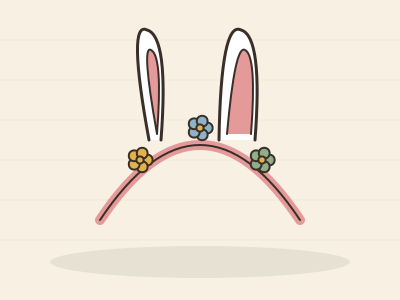
Drawing of a pink headband with two tall white and pink bunny ears and small flowers.
White outer loops, pink inner loops, flowers at the base.

What you'll need

  • A plain plastic or fabric headband
  • 4 white and 2 pink pipe cleaners
  • Small faux flowers (optional)
  • Scissors or wire snips

How to make it

  1. Shape the outer ear. Bend a white pipe cleaner into a long, narrow loop and twist the ends together.
  2. Add the inner ear. Bend a pink pipe cleaner into a smaller loop and twist it inside the white one at the base.
  3. Make the second ear. Repeat with the second white and pink pipe cleaners.
  4. Attach the ears. Wrap the twisted ends of each ear around the headband, a few inches apart.
  5. Cover the base. Wrap a third white pipe cleaner around the band to hide the twists, and twist on a flower or two.

Make it your own

  • Use brown or gray pipe cleaners for other animals, like a mouse or a fox.
  • Wrap the headband in ribbon first for a finished look.
  • Add a pom-pom nose and whiskers on a paper mask to match.

Care and storage. Pipe cleaners bend easily, so store the ears in a box rather than a drawer. Reshape the loops with your fingers before you wear them again.

From bunny ears to teenage breakouts

Little kids wear bunny ears. Older kids worry about their skin. Mayo Clinic notes that hormones rise in boys and girls during puberty and make the skin's oil glands produce more oil, which is part of why acne is so common in teens. When the questions come, these pimple basics are a good place to start.

The full guide, from howtogetridofpimples.org

How to get rid of pimples, whiteheads, blackheads and acne cysts

Benzoyl peroxide, salicylic acid, adapalene and a pimple patch are your at-home tools. Wash gently, put one product on the whole area to unclog pores, cover open spots and leave them alone: popping causes scars.

  • Benzoyl peroxide
  • Salicylic acid
  • Adapalene (retinoid)
  • 6 to 8 weeks

Last reviewed · based on 5 dermatology sources

How to get rid of a pimple

  • Whitehead
  • Blackhead
  • Papule
  • Pustule
  • Nodule
  • Cyst
    1. Wash gently

      Wash your face up to twice a day and after sweating, using your fingertips and a gentle, non-abrasive cleanser. Scrubbing irritates the skin. After sports, wash as soon as you can. It's the first part of a simple skincare routine for acne.

    2. Treat the whole area

      Spread a thin layer of one product over all acne-prone skin, not just the spot: benzoyl peroxide, adapalene or salicylic acid. For adapalene, a pea-sized amount covers your whole face, every other night at first.

    3. Cover it

      Put a hydrocolloid pimple patch on an open pimple. Worn overnight, it can speed up healing and calm irritation.

    1. Hands off

      Don't pick, pop or squeeze. It makes acne take longer to clear and raises the risk of scars and dark spots.

    2. Deep, painful pimple

      Hold a clean, warm, damp washcloth on it for 10 to 15 minutes, three times a day, to bring it to the surface. Then use a thin layer of one acne product. If it won't go, a dermatologist can treat it, for example with a steroid injection.

    1. Be patient

      Give one product 6 to 8 weeks. If it works, you should see some improvement in 4 to 6 weeks; clearing can take 2 to 3 months. No change after 6 to 8 weeks? See a dermatologist.

      Once it clears, keep using it, and these habits help keep new pimples from forming.

What to put on a pimple

An over-the-counter pimple treatment is an acne product you can buy without a prescription. It means you can start tonight with one active ingredient. The strength of salicylic acid to start with is 2%, per a Yale Medicine dermatologist.

Pimple treatments you can buy without a prescription
IngredientWhat it doesBest forStrengthHow long
Benzoyl peroxideKills acne-causing bacteria and reduces inflammationRed, inflamed pimplesWashes and creams6 to 8 weeks
Salicylic acidRemoves dead skin cells, cuts oil, unclogs poresPapules and pustules2% wash, two to three times a week6 to 8 weeks
AdapaleneA retinoid: unclogs pores and reduces oilinessBlackheads and whiteheadsGel without a prescription; stronger with oneA few months before trying stronger
Azelaic acidOne of four acne-fighting ingredients dermatologists nameA deep pimple once it surfacesSold without a prescription6 to 8 weeks

Using more than one or two products at once can irritate your skin. See how the main acne treatments compare, including prescription options.

Pimple types

A pimple type is the kind of acne blemish you see, from a clogged pore to a deep cyst. It means each type needs a different treatment. The depth of a pimple decides whether you can treat it at home.

Whiteheads
Closed, clogged pore
A pore clogged with oil, bacteria and dead skin cells that closed up: a tiny white or flesh-colored bump.Adapalene plus a benzoyl peroxide wash.
Blackheads
Open, clogged pore
A clogged pore that stays open. The dark dot isn't dirt, so don't scrub it.Adapalene plus a benzoyl peroxide wash.
Papules
Small, red, hard bump
Small, red bumps that feel hard. Lots of them can feel like sandpaper.Wash twice a day with benzoyl peroxide or salicylic acid.
Pustules
Red bump, white center
Like papules, but with a white or yellow center.Benzoyl peroxide or salicylic acid wash; don't pop.
Nodules
Deep, hard, painful lump
Deep under the skin. They often leave scars.A warm compress, then a dermatologist.
Cysts
Deep, filled sac
Deep, painful lumps you may feel more than see. They often scar.See a dermatologist early: fewer scars.

What to skip

  • ScrubbingWashcloths, sponges and scrubs irritate acne-prone skin and make acne worse.
  • PoppingIt slows healing and raises the risk of scars and dark spots.
  • Toners and astringentsThey can dry your skin and make acne look worse. Look for "alcohol-free" on the label.
  • Switching every few daysNew products too often irritate your skin and cause breakouts.
  • TanningTanning damages skin and can worsen acne. Use a non-comedogenic SPF 30+ sunscreen.

When to see a dermatologist

A dermatologist is a doctor who treats skin, including acne that home care can't clear. It means you get prescription treatment, such as tretinoin, and procedures like chemical peels, light therapy or steroid injections. Go if you have:

  • Painful lumps under the skin (nodules or cysts)
  • Scarring
  • No change after 6 to 8 weeks of products you bought yourself
  • Acne that hurts your mood or confidence

Your questions, answered

Straight answers to what people search for most.

How do you get rid of a pimple overnight?

You can't make one disappear by tomorrow. Nothing works that fast. What helps tonight: a pimple patch on an open pimple, worn overnight, and keeping your hands off it.

Do pimples heal faster popped or unpopped?

Unpopped. Popping makes acne take longer to clear and raises your risk of scars and dark spots.

Do pimple patches really work?

On an open pimple, yes. The hydrocolloid in them absorbs fluid and forms a protective gel. Worn overnight, they can speed up healing and calm irritation.

What kills pimples best?

There's no single winner. Benzoyl peroxide kills acne-causing bacteria, adapalene unclogs pores, and salicylic acid unclogs pores and eases inflammation. The best one is the one that fits your pimple type.

What is the #1 cause of acne?

Clogged pores. Extra oil and dead skin cells block a pore, and bacteria grow in it. Hormones, genes and things around you play a part too.

Sources

  1. American Academy of Dermatology. 6 skin care habits that can clear acne. aad.org/public/diseases/acne/skin-care/tips
  2. American Academy of Dermatology. Treating deep, painful pimples. aad.org/public/diseases/acne/diy/treat-deep-painful-pimple
  3. American Academy of Dermatology. Acne: types of breakouts. aad.org/public/diseases/acne/diy/types-breakouts
  4. American Academy of Dermatology. Acne: tips for clearer skin. aad.org/public/diseases/acne/diy/wont-clear
  5. Yale Medicine. Treating acne at home. yalemedicine.org/news/treating-acne-at-home

Last reviewed

This page is general information, not a diagnosis. See a dermatologist if you have painful lumps (nodules or cysts), scarring, no change after 6 to 8 weeks, or if acne affects your mood.