We may earn a commission if you buy through links on this page, at no extra cost to you. Picks are based on specs, retailer data and owner reports, not paid placement. Disclosure.
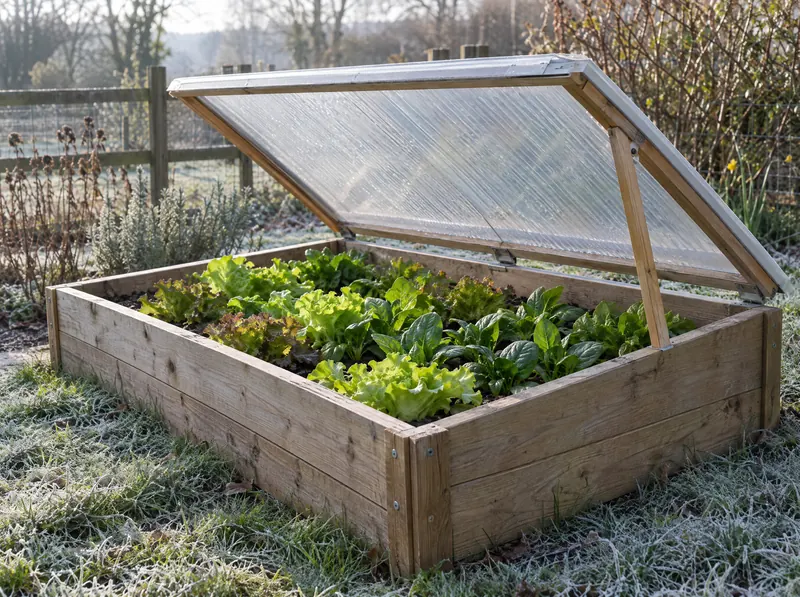
A cold frame is a low box with a clear lid that keeps plants roughly 5-10 F warmer than the air outside (University of Vermont Extension). For most gardeners, the Juwel Bioprotect is the best cold frame kit: an aluminum frame with a 4 mm twin-wall lid that swaps to an insect screen in summer. The Juwel Bio-Star 1500 adds 8 mm panels and an automatic vent. If you want a waist-high cedar box, get the Backyard Discovery Aggie. Want tall crops or room to stand? Then you need a greenhouse, not a cold frame.
- 1Best overallJuwel Bioprotect Cold Frame
Two jobs in one frame: polycarbonate in spring and fall, insect screen in summer.
No published wind or snow rating$229typical, Oct 2026 - 2Best insulated, auto-ventJuwel Bio-Star 1500 Cold Frame
Best-insulated cold frame here with an auto-vent.
No published wind or snow rating$460typical, Oct 2026 - 3Best waist-high cedarBackyard Discovery Aggie Cold Frame
Waist-high cedar planter plus cold frame with an automatic vent.
No published wind or snow rating$349typical, Oct 2026 - 4Best for raised bedsGrowing Spaces Cold Frame
Premium 5-wall glazing to drop over an existing raised bed.
No published wind or snow rating$395typical, Oct 2026 - 5No published wind or snow rating$70typical, Oct 2026
- 6Best long frameJuwel Bio Protect 2000
Long Juwel frame to cover a full raised bed with insect netting built in.
No published wind or snow rating$535typical, Oct 2026
Cold frames are the oldest season extender there is, and still the cheapest way to get salad greens a month early or to harden off seedlings without carrying trays in and out every night. Our picks are based on manufacturer specs, retailer listings, extension-service research and owner reviews. We haven't used these frames ourselves.
Cold frame vs greenhouse: which do you need?
| Cold frame | Mini greenhouse | Walk-in greenhouse | |
|---|---|---|---|
| Temperature gain | About 5-10 F over outside air (UVM) | A few degrees; thin covers lose heat fast | More, and it can be heated |
| Height | 10-20 in at the lid | 4-6 ft shelves | 6-8 ft, walk in |
| Grows in | The ground or a raised bed | Pots and trays on shelves | Ground, beds, benches |
| Best for | Greens, hardening off, early sowing | Seed starting on a patio | Tomatoes, peppers, overwintering, year-round |
| Typical cost | $70 to $535 | Under $100 for most | Hundreds to thousands |
The rule of thumb: if the crop fits under 20 inches, a cold frame does the job for a fraction of the cost. If you want to stand up, start hundreds of seedlings or grow summer crops early, look at small greenhouse kits or a backyard hoop house. Shelf-style units are covered in our mini greenhouse roundup.
The best cold frame kits
Juwel Bioprotect Cold Frame
This is the most versatile cold frame here. It has a rust-free aluminum frame, a 4 mm UV-resistant twin-wall polycarbonate top, and galvanized steel anchors in the box, so it won't blow off the bed. The lid slides out to reveal an insect screen, so the same frame protects brassicas from cabbage moths in summer. Juwel guarantees the polycarbonate against UV damage for 5 years.
Why it stands out
- Twin-wall lid insulates better than single-layer plastic
- Converts to an insect-screen cover for summer
- Anchors included
Watch out for
- Low profile (17 in at the back) suits greens and transplants, not tall crops
- No automatic vent, so you open it on sunny days
Full specs
- Sizes
- 4.2 x 1.9, 1 ft front / 1.4 ft back (50 x 23 x 12/17 in)
- Footprint
- 4.2 x 1.9
- Peak height
- 1.4 ft
- Frame
- Rust-free aluminum
- Cover
- 4 mm UV-resistant twin-wall polycarbonate top panel that slides out to an insect screen
- Door
- Removable polycarbonate top panel / screen
- Warranty
- 5-year guarantee against UV damage (polycarbonate)
Specs from gardeners.com. Prices checked Oct 2026 and change often.
Juwel Bio-Star 1500 Cold Frame
The Bio-Star 1500 has the thickest glazing of the kits we compared: 8 mm twin-wall polycarbonate with a no-drip coating. It has three roof windows, and one has an automatic opener, which solves the biggest cold-frame problem (cooking your plants while you're at work). The polycarbonate carries a 10-year UV guarantee and the unit a 2-year warranty. Burpee's listing says it's "good enough for 6 feet of snow", but gives no load figure, so treat that as marketing.
Why it stands out
- 8 mm twin-wall panels, the best insulation in this roundup
- Automatic vent on one window
- Longest UV guarantee (10 years)
Watch out for
- About twice the price of the Bioprotect
- Snow claim has no psf rating behind it
Full specs
- Sizes
- 4.9 x 2.7, 1.3 ft front / 1.7 ft back (59 x 32 x 16/20 in)
- Footprint
- 4.9 x 2.7
- Peak height
- 1.7 ft
- Cover
- 8 mm twin-wall polycarbonate with no-drip coating
- Door
- 3 roof windows, one with automatic opener
- Warranty
- 10-year polycarbonate UV guarantee; 2-year unit warranty
Specs from burpee.com. Prices checked Oct 2026 and change often.
Backyard Discovery Aggie Cold Frame
The Aggie is a solid cedar planter on powder-coated steel legs with a double-wall polycarbonate lid. Its temperature-activated hinge opens the lid by itself above 70 F. Because it's a raised planter box, you won't have to kneel, and it works on a patio or deck where there's no soil. Backyard Discovery gives it a 5-year warranty.
Why it stands out
- Waist height: no bending, works on hard surfaces
- Automatic venting hinge
- Cedar box is rot-resistant
Watch out for
- 94.8 lb, so it isn't moving once placed
- A raised box loses heat faster than an in-ground frame because the soil isn't connected to the earth
Full specs
- Sizes
- 4 x 2.4 x 2.7 (48 x 28.75 x 32 in incl. legs)
- Footprint
- 4 x 2.4
- Peak height
- 2.7 ft
- Frame
- Solid cedar with powder-coated steel legs
- Cover
- Double-wall polycarbonate lid
- Door
- Lid with temperature-activated hinge (opens above 70 F)
- Warranty
- 5-year warranty
Specs from backyarddiscovery.com. Prices checked Oct 2026 and change often.
Growing Spaces Cold Frame
Made by the company behind the Growing Dome, this frame drops a 5-wall polycarbonate lid on a pine frame over an existing raised bed. It has a Univent automatic opener. The 5-wall glazing is the most insulating structure here, though at about 10 in tall it's strictly for low crops.
Why it stands out
- 5-wall polycarbonate
- Univent automatic opener included
- Designed to sit on your existing bed
Watch out for
- Only about 10 in tall
- Made to order, with pickup scheduling
- Pine frame needs sealing to last
Full specs
- Sizes
- 3.8 x 2.25 x 0.8 (46 x 27 x 10 in, approx.)
- Footprint
- 3.8 x 2.25
- Peak height
- 0.8 ft
- Frame
- Pine
- Cover
- 5-wall polycarbonate
- Door
- Hinged lid with Univent automatic opener
Specs from growingspaces.com. Prices checked Oct 2026 and change often.
Zenport Cold Frame Cloche
A soft-sided cloche: a green-painted steel frame with a clear plastic cover and a roll-up zippered panel, sized for a raised bed. It's the cheapest way to harden off transplants or protect a row of seedlings from a late frost. Expect it to last a season or two, not a decade.
Why it stands out
- Cheapest frame here with a real steel structure
- Roll-up panel makes venting easy
- Light enough to move between beds
Watch out for
- Owners say the plastic is flimsy and zippers can fail within a week
- Minimal insulation compared with twin-wall lids
Full specs
- Sizes
- 3.9 x 2 x 2 (47 x 23.6 x 23.6 in)
- Footprint
- 3.9 x 2
- Peak height
- 2.0 ft
- Frame
- Green-painted tubular steel
- Cover
- Clear plastic
- Door
- Roll-up zippered panel
- Warranty
- Limited (Amazon spec table)
Specs from amazon.com. Prices checked Oct 2026 and change often.
Juwel Bio Protect 2000
A 6.6 ft long Juwel frame that covers a full raised bed. It has 8 mm thermal panels and two windows with an integrated insect net. If you want twin-wall glazing over a whole bed rather than a corner of it, this is the size to get.
Why it stands out
- Covers a full-length bed
- 8 mm thermal panels
- Insect netting built into the windows
Watch out for
- Amazon listed a 6-7 month ship time
- Only 22 ratings (3.6/5)
Full specs
- Sizes
- 6.6 x 2.5 x 1.7 (200 x 76.5 x 52/44 cm)
- Footprint
- 6.6 x 2.5
- Peak height
- 1.7 ft
- Cover
- 8 mm thermal (twin-wall) panels
- Door
- 2 windows with handles and integrated insect net
Specs from amazon.com. Prices checked Oct 2026 and change often.
Outsunny Wooden Cold Frame
A small fir-wood frame with a sloped, openable polycarbonate top. It's big enough to harden off a few flats on a patio or along a south wall. Owners say it's easy to assemble and works as a cold frame, but quality reports are mixed, and the single-layer panels insulate far less than Juwel's twin-wall lids.
Why it stands out
- Wood look at a low price
- Lid props open on two side supports
Watch out for
- Thin single-layer panels
- Fir needs sealing to survive wet winters
Full specs
- Sizes
- 3.3 x 2.1 x 1.3 (39.25 x 25.5 x 15.75 in)
- Footprint
- 3.3 x 2.1
- Peak height
- 1.3 ft
- Frame
- Solid fir wood
- Cover
- Clear polycarbonate (spec table lists 0.1 in / 0.3 cm wall)
- Door
- Openable sloped top with 2 side supports
Specs from amazon.com, amazon.com. Prices checked Oct 2026 and change often.
Cold frame kits compared
| Model | Sizes | Cover | Warranty | Typical price | Shop |
|---|---|---|---|---|---|
| Bioprotect Year-Round Cold Frame by Juwel | 4.2 x 1.9, 1 ft front / 1.4 ft back (50 x 23 x 12/17 in) | 4 mm UV-resistant twin-wall polycarbonate top panel that slides out to an insect screen | 5-year guarantee against UV damage (polycarbonate) | $229 | Gardener's Supply |
| Bio-Star 1500 Premium Cold Frame | 4.9 x 2.7, 1.3 ft front / 1.7 ft back (59 x 32 x 16/20 in) | 8 mm twin-wall polycarbonate with no-drip coating | 10-year polycarbonate UV guarantee; 2-year unit warranty | $460 | Burpee |
| Aggie Cold Frame Box (Aggie Cedar Cold Frame Planter Box) | 4 x 2.4 x 2.7 (48 x 28.75 x 32 in incl. legs) | Double-wall polycarbonate lid | 5-year warranty | $349 | Backyard Discovery |
| Cold Frame for Raised Beds & Garden Beds | 3.8 x 2.25 x 0.8 (46 x 27 x 10 in, approx.) | 5-wall polycarbonate | — | $395 | Growing Spaces |
| Zenport Garden Cold Frame Greenhouse Cloche (SH3212A) | 3.9 x 2 x 2 (47 x 23.6 x 23.6 in) | Clear plastic | Limited (Amazon spec table) | $70 | Amazon |
| JUWEL Bio Protect 2000 Bed System Cold Frame (20148) | 6.6 x 2.5 x 1.7 (200 x 76.5 x 52/44 cm) | 8 mm thermal (twin-wall) panels | — | $535 | Amazon |
| Outsunny Wooden Cold Frame Mini Greenhouse 39" x 26" x 16" (845-471) | 3.3 x 2.1 x 1.3 (39.25 x 25.5 x 15.75 in) | Clear polycarbonate (spec table lists 0.1 in / 0.3 cm wall) | — | — | Amazon |
How to choose a cold frame kit
Glazing: the single biggest difference
The lid is what holds the heat. Twin-wall polycarbonate traps an insulating air layer, and thicker is better. Juwel sells the same frame idea in 4 mm (5-year UV guarantee) and 8 mm (10-year UV guarantee), and Growing Spaces uses 5-wall. Soft plastic covers on cloche-style frames are cheaper and lighter, but they tear, and they give up their heat as soon as the sun goes down.
Venting: automatic beats remembering
UVM Extension's advice is simple: prop the lid open to vent. The problem is the sunny March day when you're at work. A closed frame can hit lethal temperatures for seedlings within hours. Three kits here vent themselves: the Bio-Star 1500 (one automatic window), the Aggie (its hinge opens above 70 F) and Growing Spaces (Univent). For any other frame, a wax-cylinder vent opener is a cheap retrofit. See our vent opener and fan guide.
Size and height
- Depth front to back: 2-3 ft lets you reach the back without stepping in.
- Height: 10-20 in fits lettuce, spinach and seedlings in flats. Don't expect broccoli to stay inside.
- Length: match it to your bed. A 4 ft frame covers about a third of a standard 4x8 raised bed. The 6.6 ft Bio Protect 2000 covers most of one.
In-ground vs raised
A frame sitting on the soil uses the ground's stored heat. A legged box like the Aggie is easier on your back and works on a patio, but its soil volume is cut off from the earth. On frosty nights, that makes it closer to the outside temperature.
Anchoring and wind
A light frame with the lid propped open is a sail. The Bioprotect ships with galvanized anchors and the Bio-Star with corner stakes. For soft cloches, weigh the edges down or stake the frame through its base.
How to use a cold frame through the year
- Late winter: sow early greens Put the frame in place a week or two before sowing so the soil warms up. Sow spinach, lettuce, arugula and radishes directly in the bed.
- Spring: harden off seedlings Move indoor-started transplants into the frame for a week or two. Open the lid a little wider each day until it stays open overnight.
- Summer: switch to screen or remove Swap the lid for an insect screen (the Bioprotect and Bio Protect 2000 have one built in) or take the frame off the bed.
- Fall: extend the harvest Plant hardy greens in late summer. Close the frame on frosty nights and vent on sunny days.
- Deep winter: protect and wait Growth slows sharply in the darkest weeks. Add a frost blanket inside on the coldest nights and brush snow off the lid so light gets through.
Want more protection than a frame gives? University of Alaska Fairbanks reports that fabric floating row covers protect plants down to about 28 F. A row cover inside a cold frame adds a second layer for the coldest nights.
DIY cold frame or kit?
A homemade frame from a lumber box and an old window or a polycarbonate offcut costs less than any kit and works just as well. A few things to know:
- Slope the lid toward the south (higher at the back) so it catches low winter sun and sheds rain.
- Older painted windows may contain lead paint (common in homes built before 1978). Test before you sand or cut, and keep flaking paint out of food beds.
- Use naturally rot-resistant wood such as cedar, or seal the box well.
- Twin-wall polycarbonate sheet makes a lighter, safer lid than glass.
Kits win on twin-wall glazing, automatic vents and anchoring hardware. For a scratch-built option that goes all the way to a walk-in structure, see our DIY greenhouse guide.
Mistakes to avoid
- Forgetting to vent More cold-frame crops die of heat than of cold. Get an automatic opener or a routine.
- Facing it the wrong way Put the low side and the glazing to the south, ideally against a wall or fence that blocks north wind.
- Expecting a greenhouse 5-10 F won't get tomatoes through a frost. Pick crops that tolerate cold.
- Letting snow sit on the lid Snow blocks light. Brush it off after storms.
- Ignoring slugs Damp, sheltered frames are perfect slug habitat. Check under the edges.
Next steps
If a cold frame isn't enough, the next step up is a low tunnel or hoop house. Both are in our hoop house kit guide. Planning for real winter growing? Our winter greenhouse guide covers heating and insulation. And if budget is the main constraint, start with our list of cheap greenhouse kits that are worth it.
Frequently asked questions
How much warmer is a cold frame than outside?
University of Vermont Extension says to expect 5 to 10 degrees F warmer than the outside air. Twin-wall lids, a sheltered south-facing spot and dark soil push you toward the top of that range; a thin single-layer lid on an exposed site stays near the bottom.
What is the difference between a cold frame and a greenhouse?
A cold frame is a low, bottomless box with a clear lid that sits on the soil and that you reach into. A greenhouse is a structure you walk into. Cold frames are cheaper and great for greens and hardening off; greenhouses hold more air, more plants and can be heated.
When should I open a cold frame?
Whenever the sun is on it and the outside air is above freezing. On a sunny spring day a closed frame overheats in minutes. Prop the lid open a few inches, or buy a frame with an automatic opener.
What can you grow in a cold frame in winter?
Cold-hardy greens such as spinach, lettuce, kale, mache, arugula and scallions. In most US zones a cold frame slows their growth through the darkest weeks but keeps them harvestable longer, then gives them a fast start in late winter.
Can I build a cold frame from old windows?
Yes, it is the classic DIY build. Check older painted windows for lead paint before you cut, sand or use them over food crops (homes built before 1978 may have it), and use naturally rot-resistant or well-sealed lumber for the box.
Is a cold frame worth it?
If you want to start greens a month earlier, harden off seedlings or keep salad going into early winter, yes. If you want tomatoes in March or tall crops, you need a greenhouse or hoop house.
Keep reading
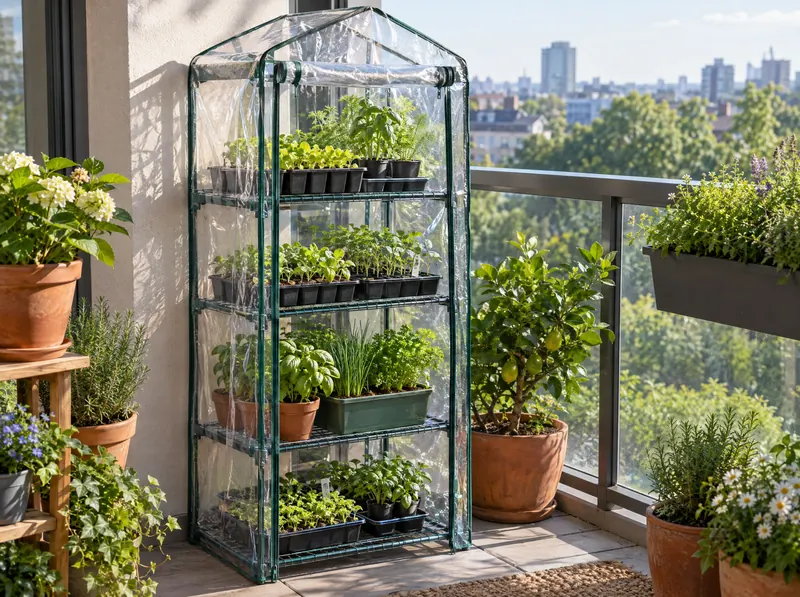 Kits by sizeMini greenhouses4-tier and 5-tier shelf greenhouses, tabletop tunnels and mini cold frames: which one fits, and how to keep it from blowing over.
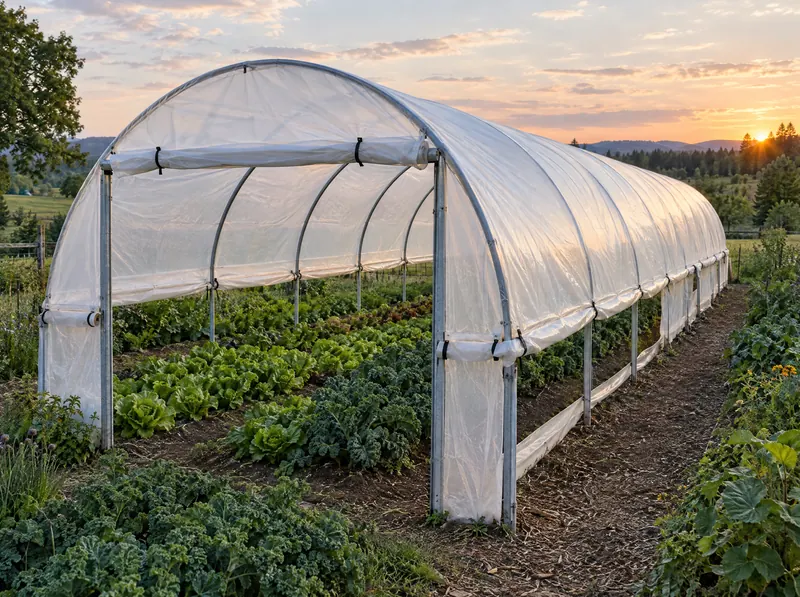 Kits by typeHoop house & high tunnel kitsBackyard hoop houses, NRCS-ready high tunnels, caterpillar and low tunnels: which kit fits, and what the price leaves out.
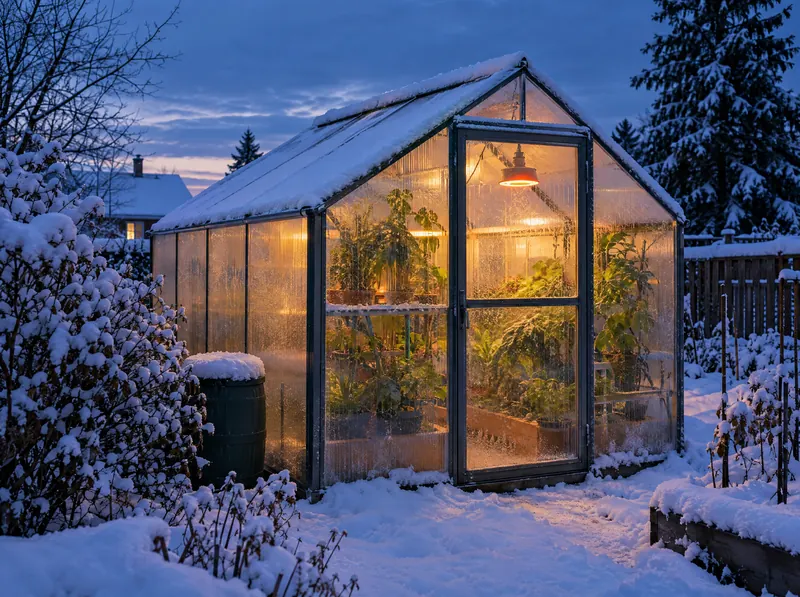 Growing guideWinter greenhouse guideKeep a greenhouse productive in winter: what to grow, how big a heater you need, insulation, thermal mass and safety.
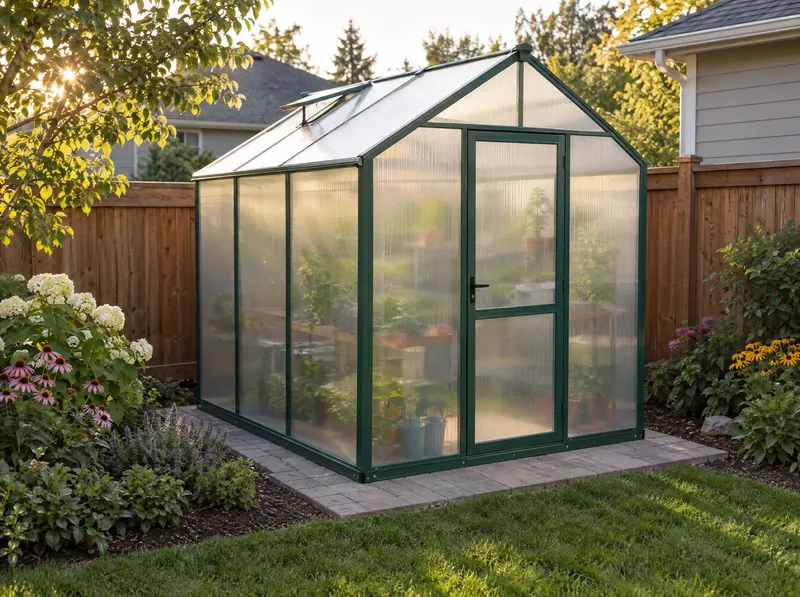 Kits by sizeSmall greenhouse kitsCompact greenhouse kits from 6x4 to 8x8: which one fits your yard, budget and winter.
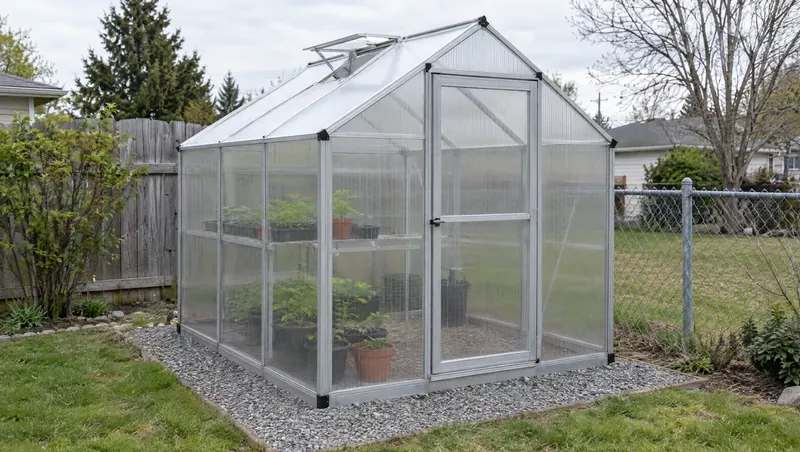 Kits by budgetCheap greenhouse kitsThe cheapest greenhouses worth buying at every budget, and the $30 of upgrades that keep them standing.
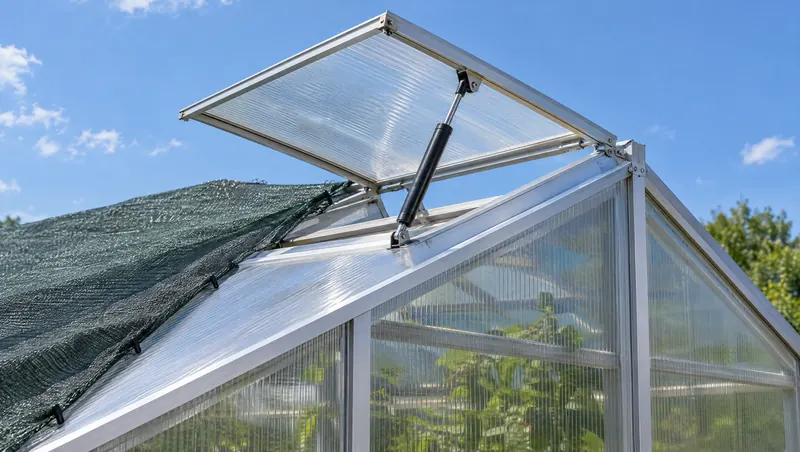 GearGreenhouse fans and ventsExhaust fans, automatic vent openers and shade cloth, sized with the 12 CFM per sq ft rule for hobby greenhouses.