We may earn a commission if you buy through links on this page, at no extra cost to you. Picks are based on specs, retailer data and owner reports, not paid placement. Disclosure.
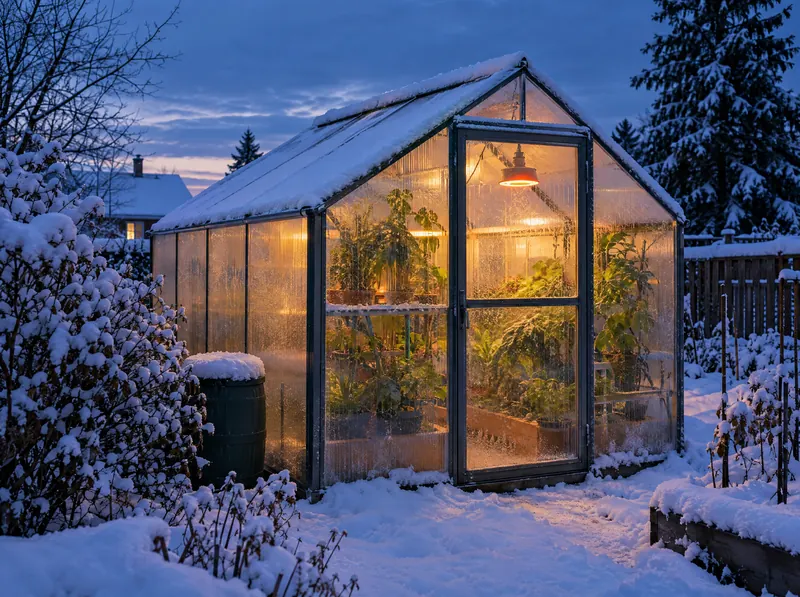
A winter greenhouse works in two ways. Unheated, it keeps cold-hardy greens and roots (spinach, kale, lettuce, radishes, carrots) harvestable through most of winter, especially with row cover inside as a second layer. Heated to frost-free (about 39-40°F), it also overwinters tender plants. Size the heater with glazing area × U-value × temperature gap: an 8x10 twin-wall greenhouse held at 40°F on a 0°F night needs about 7,000 Btu/h, roughly 2,100 W. Cut that load first with twin-wall glazing, horticultural bubble insulation and sealed gaps, add water barrels for thermal mass, vent on sunny days, and only use propane with a vent opening and a CO alarm. Light, not heat, is the limit in December and January.
Most "greenhouse in winter" advice is either a one-line tip or a promise of tomatoes in January. The reality sits between: a backyard greenhouse can feed you greens all winter for little or no heating cost, and it can keep tender plants alive if you size the heat properly. This guide covers what to grow, how to heat a greenhouse in winter (with the sizing math), insulation, thermal mass, ventilation, snow and safety. It draws on University of Alaska Fairbanks (UAF), Penn State and South Dakota State extension publications, the RHS and manufacturer manuals. How we research.
Unheated vs heated winter greenhouse
| Unheated (cold house) | Frost-free (about 39-40°F) | Warm (about 60°F nights) | |
|---|---|---|---|
| What it does | Blocks wind, traps daytime sun | Keeps the air above freezing | Active growth of warm crops |
| Grows | Spinach, kale, lettuce, radishes, carrots, other hardy greens | All of the above, plus overwintering tender (RHS H2) plants and early starts | Seedlings, citrus, some fruiting crops (light permitting) |
| Heat needed | None | Moderate; an 8x10 twin-wall house is roughly one 1,500-3,000 W heater | High: roughly 50% more than frost-free on a 0°F night in our example |
| Running cost | Nil | Roughly $2 a typical night for an 8x10 (see greenhouse cost) | Several times frost-free |
The RHS draws the same line: an unheated greenhouse can shelter half-hardy (H3) plants, while heating to frost-free, 4°C (39°F), lets you grow tender (H2) plants all winter. UAF's heating tables assume 60°F inside at night, which is a commercial growing temperature, not what most backyard growers need.
What to grow in a greenhouse in winter
South Dakota State University Extension groups vegetables by how much frost they take:
| Tolerance | Crops | Winter greenhouse use |
|---|---|---|
| Moderate freeze (24-28°F) | Broccoli, cabbage, Chinese cabbage, kale, kohlrabi, turnip; cauliflower to about 26°F | Best bets for an unheated house |
| Light freeze (28-32°F) | Beets, carrot, lettuce, onion, garlic, chives, parsley, peas, radish, spinach, Swiss chard | Unheated with row cover, or frost-free |
| No frost tolerance | Beans, sweet corn, potatoes, peppers, eggplant, cucurbits, sweet potatoes | Heated only, and light-limited in midwinter |
A bonus from SDSU: root crops get sweeter when the soil is below 40°F. Kentucky State University lists lettuce, spinach, kale, radishes and carrots as its cool-season fall and winter high-tunnel crops.
Light is the real limit: the Persephone period
Maine grower Eliot Coleman coined the "Persephone period" for the weeks when day length is under 10 hours and plant growth practically stops. The dates depend on your latitude; in East Tennessee it runs roughly 26 November to 16 January, and further north it is longer. Penn State Extension says that until about mid-February to early March there is too little sunlight for crop growth, however warm the structure is.
The practical rule: plant winter crops in late summer and early fall so they're full-size before the Persephone period, then harvest from them through winter. A heated greenhouse won't make December seedlings grow fast; it just keeps them alive.
Tunnel within a tunnel
Penn State says high-tunnel growers keep spinach and greens producing through winter with inner floating row covers or low tunnels, which trap heat in the crop canopy. In a backyard greenhouse, that means hoops of wire or conduit over the beds with frost cloth, put on in the evening and pulled back on sunny days. A cold frame inside the greenhouse does the same job for a tray of seedlings.
How to heat a greenhouse in winter: heater sizing
UAF Extension gives the formula (credited to Kramer, 2013), which it calls more accurate than per-floor-area shortcuts:
Heat loss (Btu/h) = surface area of the covering (sq ft) × U-value × temperature difference (°F)
Surface area means walls plus roof, not the floor. The U-value is the covering's heat-loss factor. UAF's figures (from NRAES-137):
| Covering | U-value (Btu/h·°F·sq ft) |
|---|---|
| Glass, single / polycarbonate, single / fiberglass, single | 1.2 |
| Plastic film, single | 1.25 |
| Plastic film, double | 0.8 |
| Acrylic or polycarbonate, double (twin-wall) | 0.6 |
| Glass, single, with thermal blanket | 0.5 |
| Plastic film, double, with thermal blanket | 0.4 |
| Perimeter, uninsulated / insulated with 2 in foam 24 in deep | 0.8 / 0.4 |
Palram's own data for its SUNLITE sheet converts (our arithmetic) to about 0.67 for 4 mm twin-wall, 0.62 for 6 mm, 0.58 for 8 mm and 0.51 for 10 mm, so thicker panels help, but going from single to double glazing is the big step.
Worked example: an 8x10 greenhouse
- Surface area. An 8x10 with 5 ft sidewalls and a 7.5 ft peak: sides 100 sq ft + ends 80 + gable triangles 20 + roof about 94 = about 294 sq ft.
- Temperature gap. You want 40°F inside; your coldest typical night is 0°F. TD = 40°F.
- Heat loss, twin-wall. 294 × 0.6 × 40 = 7,056 Btu/h.
- Convert to watts. 1 kWh = 3,412 Btu, so 7,056 ÷ 3.412 = about 2,070 W. A 1,500 W heater (about 5,118 Btu/h) falls short on that night; a 3,000 W, 240 V heater (about 10,236 Btu/h) covers it with margin.
- Same house, single glazing. 294 × 1.2 × 40 = 14,112 Btu/h, about 4,140 W: double the heater and double the bill.
- Warm house check. Holding 60°F instead (TD 60): 294 × 0.6 × 60 = 10,584 Btu/h. UAF's per-floor-area shortcut for a freestanding double-glazed house at 0°F outside, 60°F inside, is 150 Btu per sq ft, or 12,000 Btu/h for 80 sq ft; UAF notes the shortcut tends to overestimate.
These are our calculations using UAF's method; your numbers will differ with the shape of your greenhouse and your local design low. UAF advises that a slightly oversized heater is always better than an undersized one, and that a backup heater is wise for cold snaps or if the main one fails. Size on the heater's output rating. For running costs per night with EIA electricity prices, see how much a greenhouse costs; for heater picks by size, see the best greenhouse heaters.
Bio Green Palma (Digital)
The Palma is built for greenhouses: a stainless-steel fan heater with two heat settings (750 W or 1,500 W), a digital thermostat, a fan-only mode for summer circulation and an IPX4 splash rating. It runs on a normal 120 V outlet. The maker says it suits up to 130 sq ft (Amazon says 120), but by our sizing math 1,500 W is enough to hold an 8x10 twin-wall house at 40°F only down to outside lows of about 10°F. In colder zones, pair it with a second heater or step up to 240 V.
Why it stands out
- Designed for damp greenhouse air (IPX4)
- Digital thermostat and fan-only mode
- Plugs into a standard outlet
Watch out for
- 1,500 W limits it to small or mild-climate houses
- Listings disagree on area and thermostat range
Full specs
- Key specs
- 120 V; two heating elements, 750 W or 1,500 W; 5,120 BTU/h on the maker's page (Amazon title says 5,100 BTU/h); Thermo 2 digital thermostat; fan-only air-circul
Specs from amazon.com, biogreen-products.com. Prices checked Oct 2026 and change often.
For a bigger load, the Dr. Infrared DR-218 3000 W (240 V, IPX4) gives about 10,236 Btu/h but needs a NEMA 6-20 receptacle. If you add an external thermostat to a 1,500 W heater, note that the popular Inkbird ITC-308 is limited to 10 A (about 1,100-1,200 W); the bayite BTC211 is rated 1,650 W / 15 A.
Plug electric heaters into a GFCI-protected outdoor outlet, keep cords and plugs off wet floors, and avoid light-duty extension cords for 1,500 W loads. Check the heater has a splash rating: the Palma and DR-218 are IPX4; the cheap Comfort Zone milkhouse heater lists none.
Insulating a greenhouse for winter
Every unit of heat loss you prevent is heater capacity you don't have to buy and power you don't pay for. In order of payoff:
- Seal the gaps. Fit door seals, tape panel gaps and close vents fully at night. Drafts can matter as much as the glazing.
- Add horticultural bubble insulation. Fix it to the inside of the glazing, especially the roof and north wall. RHS notes a plastic layer cuts out about 10% of light, usually a worthwhile trade, except for crops that need maximum light such as winter lettuce.
- Insulate the north wall solidly. If little sun comes through it, a foam board or a reflective panel loses less heat than glazing.
- Insulate the perimeter. UAF halves the perimeter's heat-loss factor (0.8 to 0.4) with 2 in foam board 24 in deep. See our greenhouse foundation guide.
- Use row covers at night. The tunnel-within-a-tunnel approach keeps the crop warm without heating all the air.
Charley's Greenhouse Bubble Insulation
Charley's horticultural bubble is the proper product, not packing bubble wrap: 24 in wide with 1 in x ¼ in UV-stable bubbles on a nylon-reinforced backing, rated for 3-4 years indoors. Fix it with double-sided tape, liner clips or staples on wood, bubble side toward the glazing. It makes the biggest difference on single-wall glass or polycarbonate. Charley's claims it can cut heating bills by up to half; that's the seller's figure, not an independent test.
Why it stands out
- Made for greenhouses, UV-stable
- Sold by the foot or in rolls
- Comes down easily in spring
Watch out for
- Costs about 10% of light (RHS)
- Lasts 3-4 years, then replace
Full specs
- Key specs
- 24" wide; clear bubbles 1" diameter × 1/4" deep; tough nylon-reinforced translucent backing; expected life 3–4 years indoors; fix with double-faced tape or line
Specs from shop.charleysgreenhouses.com, rhs.org.uk. Prices checked Oct 2026 and change often.
Thermal mass: water barrels and more
Thermal mass soaks up daytime sun and gives it back at night. UAF's table shows a 55-gallon water barrel stores 4,590 Btu when it cools from 60°F to the greenhouse minimum of 50°F, and 18,340 Btu from 90°F. Concrete stores 224-896 Btu per cubic foot and brick 271-813 over the same range. A well-built solar greenhouse can capture enough on a sunny March day to heat it for two more days (UAF, citing Bartok).
Put that in context with our 8x10 example. On a typical night losing about 3,500 Btu/h, one barrel cooling by 10°F covers a bit over an hour (our arithmetic). Water barrels smooth out temperature swings and help on marginal nights; they don't replace a heater on a hard freeze. Paint them dark, place them where winter sun hits, and keep them under benches so they don't steal growing space. UAF also says solar greenhouses should face within 20° of true south with the ridge running east-west.
Some four-season designs build this in: the Growing Spaces 15 ft dome includes an above-ground pond as thermal mass. More in our geodesic dome greenhouse guide.
Ventilation and humidity in winter
Closed-up greenhouses in winter swing hot on sunny days and stay damp at night, which invites gray mold and mildew. NGMA's guidance is about 1.5-2 CFM of ventilation per sq ft of floor in winter, which holds the house within 15-20°F of the outside under average conditions; for an 8x10, that's 120-160 CFM (our arithmetic). Practical steps:
- Leave automatic vent openers in place; set them to open on sunny days.
- Run a small circulation fan; UConn IPM sizes horizontal airflow at about 2 CFM per sq ft of floor.
- Water in the morning so foliage dries before night.
- Watch humidity with a sensor, not guesswork.
Govee H5179 WiFi Hygrometer
The cheapest insurance in a winter greenhouse is knowing when it's getting cold before your plants do. The Govee H5179 reads temperature (±0.54°F) and humidity (±3% RH), refreshes every 2 seconds and sends app alerts over WiFi, with more than two years of cloud history. RHS points out that heater thermostat dials can be off by a few degrees because they sit near the heater, so place this at plant height in the middle of the house.
Why it stands out
- Phone alerts for frost or overheating
- Accurate, with exportable history
Watch out for
- Needs 2.4 GHz WiFi at the greenhouse
- No water-resistance rating found; keep it out of spray
Full specs
- Key specs
- WiFi plus Bluetooth to the Govee Home app; temperature accuracy ±0.3°C (0.54°F); humidity ±3% RH; refreshes every 2 seconds; Swiss-made sensor; app alerts; more
Specs from eu.govee.com, amazon.com. Prices checked Oct 2026 and change often.
No WiFi in the garden? The TempPro TP65B shows the greenhouse reading on an indoor display up to 500 ft away, with max/min records. See greenhouse fans and vent openers for exhaust options.
Snow load: keeping the roof up
Snow is how many winter greenhouses fail. Check the published snow rating of your kit and clear the roof before the load reaches it:
- Mainstream Palram kits (Mythos, Hybrid, Balance) are rated about 15 lb/sq ft; the Palram Glory 8x12 lists 20.
- Heavy-duty kits go higher: the Riverstone MONT is rated 24 lb/sq ft and the Janco Palmetto 50 lb/sq ft.
- Shape helps: steep or arched roofs such as the Exaco RIGA and the bell-shaped Palram Bella shed snow better than shallow gables.
- Brush snow off from outside with a soft broom, working down the slope; never knock it off with a hard tool that can crack panels. Gently tapping the roof from inside helps loosen a crust.
- Heated greenhouses shed snow better, because the warm glazing melts the bottom layer.
In real snow country, start with our picks in polycarbonate greenhouse kits and the heavy-duty options in the 8x10 greenhouse guide.
What makes a 4 season greenhouse?
- Insulating glazing: twin-wall polycarbonate at minimum; 8-10 mm (Riverstone MONT 8 mm, Palram Glory 10 mm) or 16 mm triple-wall (Exaco RIGA XL) for cold climates.
- A real snow rating and a roof shape that sheds snow.
- An insulated, anchored base with perimeter foam.
- Power for a heater, fans and heat mats, run by an electrician with GFCI protection.
- Thermal mass and a south-facing orientation.
- Automatic ventilation for sunny winter days and summer heat.
For seed starting in a cool greenhouse, a heat mat is far cheaper than heating the air: Bootstrap Farmer recommends soil at 65-80°F for germination, and Hydrofarm says its Jump Start mats warm the root zone 10-20°F above the air. A Jump Start 17 W single-flat mat is enough for one tray.
Propane and gas heaters: CO and ethylene safety
Propane heaters are popular because greenhouses rarely have power, but they come with rules:
- Vent the greenhouse. The Mr. Heater Big Buddy manual says to use it only in an enclosure with a window or roof vent, with at least 18 sq in of open vent area (for example a 4¼ x 4¼ in opening), and not to run other fuel-burning appliances in the same space.
- Combustion gases harm people and plants. RHS says burning gas or paraffin releases water, ethylene and carbon monoxide, so the greenhouse must be vented, which reduces the heating effect. Ethylene can damage sensitive plants, so these heaters suit hardy plants and emergency use best.
- Use a heater with safety cut-offs. The Big Buddy has an oxygen depletion sensor and tip-over shut-off; never use a heater meant only for outdoor use.
- Fit a battery CO alarm and never sleep or work for long in a greenhouse with a burning heater.
- Follow the manual on cylinders and clearances, including the distance to plants, film and panels.
Propane use is modest: Mr. Heater rates the smaller Portable Buddy at 0.044 gallons per hour on its 4,000 Btu setting. Treat propane as backup heat or for short frosts, and electricity as the main heat if you can get power to the greenhouse.
Frequently asked questions
Can you use a greenhouse in winter without heat?
Yes. An unheated greenhouse keeps cold-hardy crops like spinach, kale, lettuce, radishes and carrots going through much of winter, especially with a second layer of row cover inside (a tunnel within a tunnel). It won't keep tender crops such as tomatoes and peppers alive through frost.
How do I keep my greenhouse warm in winter without electricity?
Insulate (horticultural bubble wrap on the inside, sealed gaps), add thermal mass such as water barrels painted dark, cover crops with row cover at night, and face the greenhouse south. For emergency frosts, a vented propane heater with an oxygen-depletion sensor is the off-grid backup.
What size heater do I need for my greenhouse?
Multiply the glazing area (walls plus roof, in sq ft) by the U-value of the covering (0.6 for twin-wall polycarbonate, 1.2 for single glass or film) and by the temperature gap you need to hold. An 8x10 twin-wall greenhouse held at 40°F on a 0°F night loses about 7,000 Btu/h, which needs about 2,100 W of heat: a 3,000 W heater or two 1,500 W heaters on separate circuits.
How cold can a greenhouse get at night?
An unheated greenhouse can fall to within a few degrees of the outside low on a clear night, because glazing loses heat fast once the sun is down. Its main job in winter is to cut wind and let daytime sun warm the soil and crops.
What is a 4 season greenhouse?
A greenhouse built to grow year-round in cold climates: insulating twin- or multi-wall glazing (8-16 mm), a high snow-load rating, an insulated base, thermal mass, power for heat and fans, and a south-facing orientation. Examples include the Palram Glory, Riverstone MONT, Exaco RIGA and Growing Spaces domes.
Should I ventilate my greenhouse in winter?
Yes, on sunny days and whenever you burn fuel inside. Sun can overheat a closed greenhouse even in January, and still, humid air encourages disease. Propane and paraffin heaters also require a vent opening for combustion safety.
Keep reading
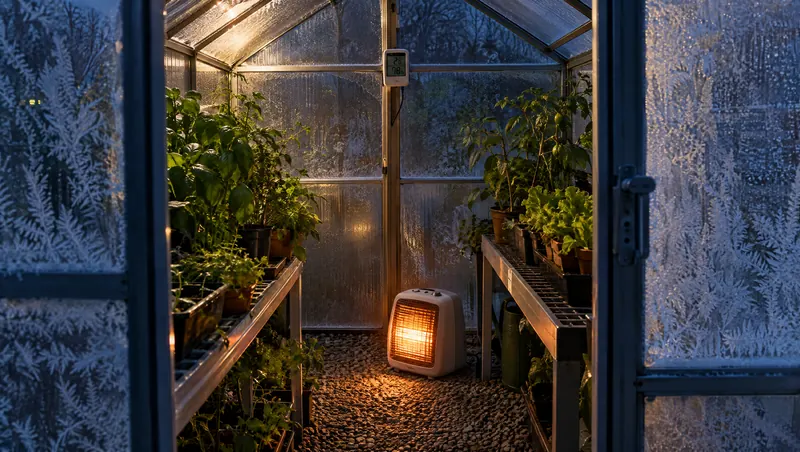 GearGreenhouse heatersElectric and propane greenhouse heaters, sized with the BTU formula, plus thermostats, running costs and safety.
 Cost guideHow much a greenhouse costsGreenhouse prices by type and size, cost per square foot, the hidden extras and what heating really costs per night.
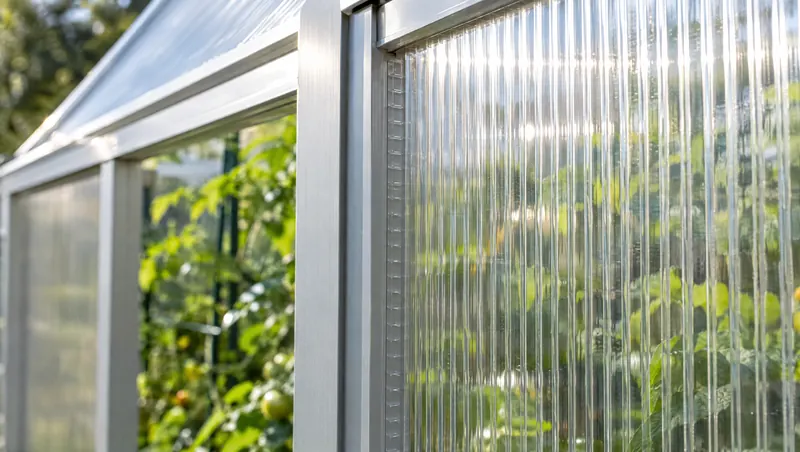 Kits by typePolycarbonate greenhouse kitsTwin-wall vs clear panels, thickness and R-values, plus six aluminum hobby kits from starter 6x8s to snow-country builds.
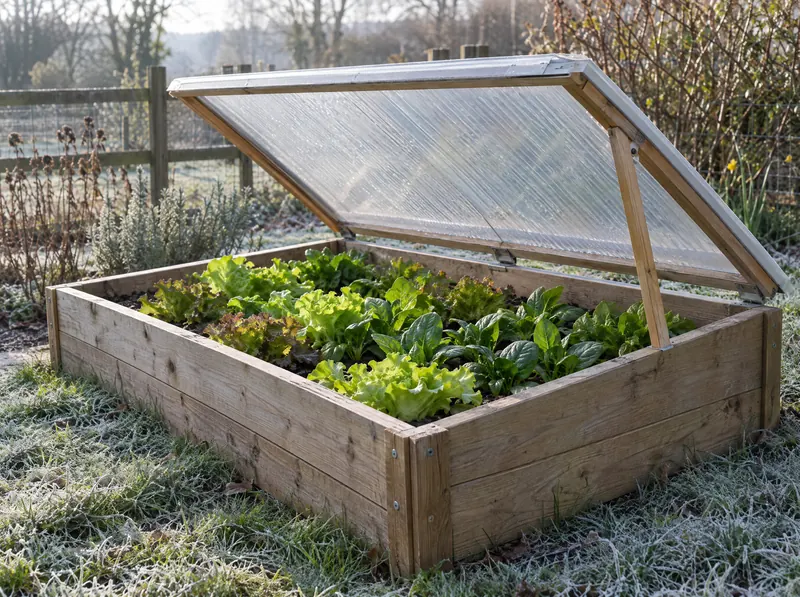 Kits by typeCold frame kitsTwin-wall, cedar and budget cold frame kits, how many degrees they really add, and when a greenhouse makes more sense.
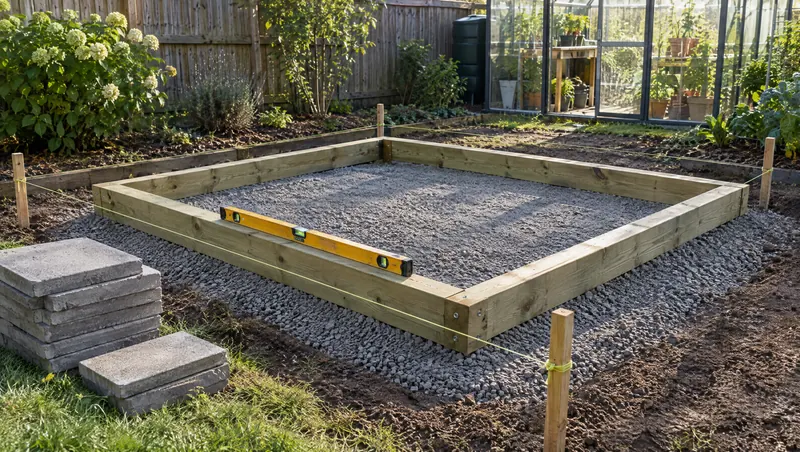 Build guideGreenhouse foundations and basesEvery greenhouse base option compared, with step-by-step timber and paver builds, squaring, anchoring and flooring.
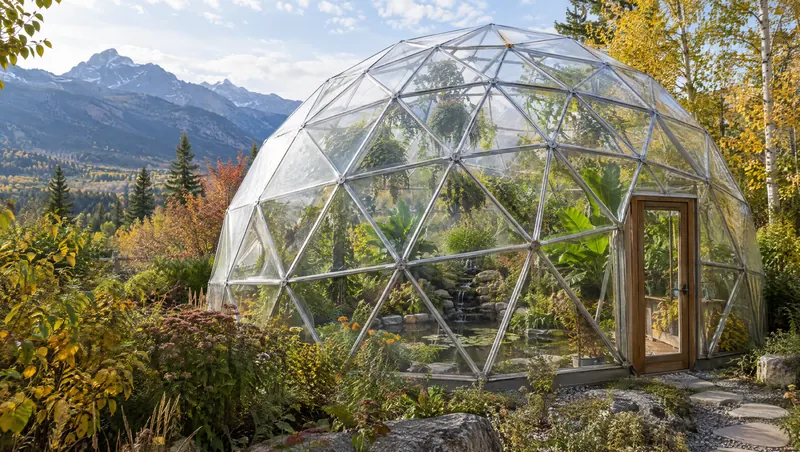 GuideGeodesic dome greenhousesWhat dome greenhouse kits cost, what the wind and snow ratings say, and when a dome beats a hoop house (rarely on price).